Why Your Key Stops Turning in Winter, and What Not to Do
Cold rarely breaks a lock on its own. It exposes a problem that was already there. Here is how to tell which of four causes you have, and why WD-40 is the wrong answer.
Written by the Locksmith Vaughan Ontario team, a mobile locksmith service covering Vaughan and the surrounding GTA. Last reviewed .
When a key stops turning in cold weather, the usual cause is moisture that has frozen inside the cylinder, lubricant that has thickened, or a worn mechanism that only fails once the cold takes away its remaining tolerance. A genuine sudden failure caused by cold alone is rare. In an Ontario winter, the cold is usually the thing that exposes a problem rather than the thing that creates it.
The single most important rule is this: do not force the key. A key that is resisting is telling you something is wrong, and forcing it is how a key snaps off inside the cylinder, which turns a minor annoyance into an extraction job.
Which of the four causes do you have?
Each cause has a distinct tell, so a few seconds of diagnosis points you to the right fix.
- The key enters but will not rotate, and the problem appeared overnight after rain or freezing drizzle: moisture has frozen inside the cylinder
- The key turns but feels heavy and slow, and it has been getting worse for weeks: the lubricant has thickened or collected grit
- The key turns freely but the bolt will not extend, and the door needs lifting or pulling: the door and frame have moved, which is alignment rather than the lock
- The key barely enters, or it enters and feels vague and gritty: the key or the cylinder is worn, and cold has removed the last of the tolerance
Why is WD-40 the wrong product for a lock?
WD-40 is a water displacer and solvent, not a long-term lubricant. Sprayed into a lock, it strips out the lubricant already present and leaves a residue that attracts dust and grit. It often frees a stiff lock for a few days, then leaves the cylinder in worse condition than before, which is why locksmiths so frequently find it in locks that have failed. Use a dry lubricant instead: powdered graphite or a PTFE or silicone based lock lubricant, applied sparingly.
How do you safely thaw a frozen lock?
- Warm the key itself, not the lock, then insert it slowly and let the heat transfer
- Use an isopropyl alcohol based de-icer, because alcohol lowers the freezing point and displaces water
- Apply hand sanitizer to the key as an improvised alternative, since it is mostly alcohol
- Shield the lock from wind while it thaws so the moisture does not immediately refreeze
Never pour hot water on a frozen lock. The water refreezes inside the mechanism within minutes, usually in greater quantity than before, and in a car door it can also freeze the door itself shut. Never use an open flame on a lock either, because it damages seals, finishes, and any electronic component nearby.
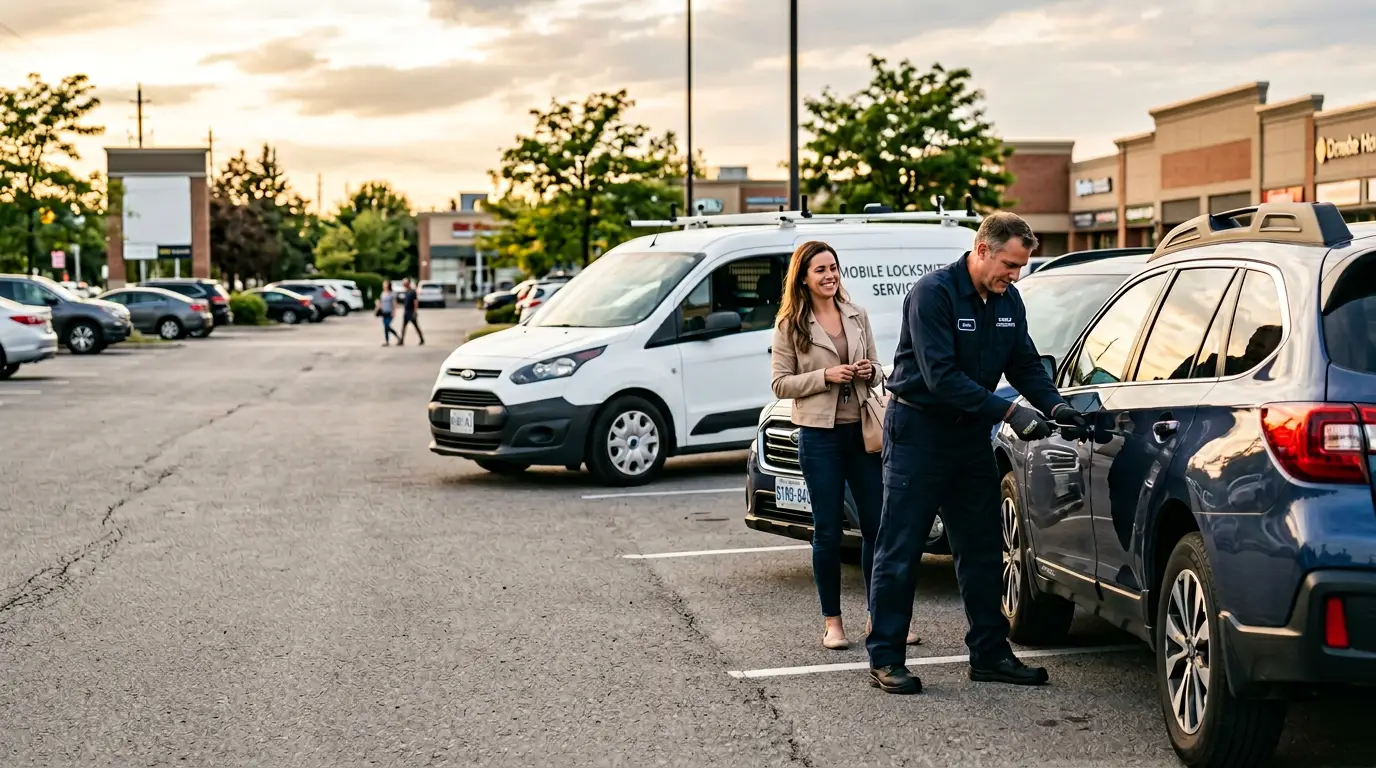
Why do car locks freeze more than house locks?
Car locks sit exposed on a vertical surface where freezing rain runs directly into the keyway, and the whole vehicle body cools to the outside temperature with nothing warming it from behind. A house lock has a heated interior on the other side of the door, which is why the same overnight freeze takes the car and leaves the front door working.
When should you stop and call someone?
Stop if the key has bent even slightly, if part of the key has broken off in the cylinder, if the lock turns but the bolt does nothing, or if thawing has already worked once and the problem has come back. A key that repeatedly needs coaxing in winter is a cylinder approaching the end of its life, and replacing it in November costs a great deal less than an emergency call in January.
How do you prevent it next winter?
- Lubricate exterior locks with a dry graphite or PTFE product before the first freeze, not after
- Replace visibly worn keys, since a worn key strains a cold cylinder more than a crisp one
- Fix any door that already needs lifting or leaning, because alignment problems get worse as materials contract
- Keep a spare key somewhere warm and accessible, so a frozen lock never becomes a full lockout