Someone Else Still Has a Key: Closing Every Way In
Rekeying the front door is the part everyone thinks of, and it is rarely enough on its own. Here is the complete inventory of ways in, and the order to close them.
Written by the Locksmith Vaughan Ontario team, a mobile locksmith service covering Vaughan and the surrounding GTA. Last reviewed .
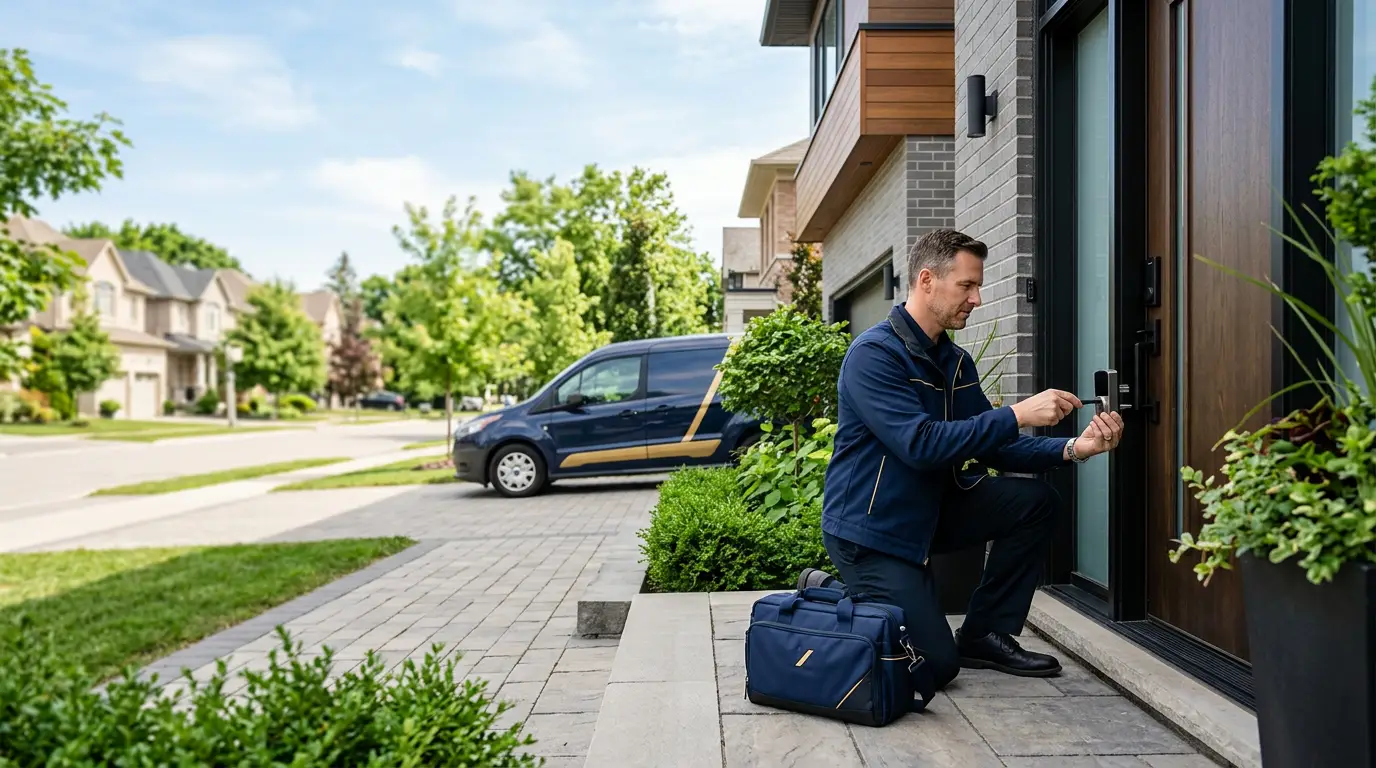
If someone else still has a way into your home, rekeying the front door closes only one of them. A typical house has between four and eight independent access paths, and most people close one or two and assume they are finished. The complete list usually includes every exterior door cylinder, garage remotes and keypad codes, smart lock user codes and paired phones, hidden spare keys, and shared building fobs.
This applies after a breakup, a roommate moving out, an ex-employee of a home business, a former cleaner or dog walker, or simply losing track of who received a key over the years. The goal is not suspicion of any one person. It is removing the uncertainty entirely.
The complete inventory of ways in
- Every exterior door cylinder, including side, back, basement, and garage-to-house doors, not only the front
- Garage door remotes, including any still clipped to a visor in someone else's car
- The exterior garage keypad code, which is separate from the remotes and is frequently forgotten
- Smart lock user codes, paired phones, and any temporary access previously shared
- Hidden spare keys under a mat, in a fake rock, or in a lockbox whose code others know
- Building fobs, elevator fobs, and mailbox keys in a condo or apartment
- Padlocks on sheds, gates, and storage lockers, which often use a key given out years ago
- Any app-based access, including camera and alarm accounts still logged in on another person's phone
Why does returning the key not settle it?
A returned key proves only that one physical copy came back. It says nothing about whether a copy was made, and copying a standard house key costs a few dollars at any hardware store and takes two minutes. This is not an accusation against the person who returned it. It is simply that a returned key cannot answer the question you are actually asking, which is whether any working key exists outside your control. Rekeying answers that question definitively, because it makes every previously cut key useless at once.
Does rekeying handle a smart lock?
Only partially, and this catches people out. Rekeying changes the mechanical cylinder, so old physical keys stop working. It does nothing to user codes, paired phones, or app access. A smart lock needs its own separate cleanup: delete every user code you did not create yourself, remove unrecognised paired devices, change the master or administrator code, and check whether anyone else still has the account credentials. Treat those account credentials like a password, because that is what they are.
In what order should you close everything?
Close everything in as short a window as possible, ideally the same day. Changing the front door on Monday and the garage keypad on Friday leaves an open path for four days, and the garage is the entry point people most often forget. Work through the list in this order.
- Rekey or replace every exterior door cylinder in one visit, and ask for them to be keyed alike so you carry one key
- Change the garage keypad code and delete or reprogram every remote, on the same day
- Clear smart lock user codes, unpair unknown devices, and change the administrator credentials
- Collect or retire hidden spare keys and reset any lockbox code
- Contact property management about fobs, mailbox keys, and building access if you are in a condo
- Change passwords on camera, alarm, and delivery accounts that grant access or visibility
When is this urgent rather than routine?
If you feel unsafe, treat it as urgent and say so when you call, because that changes the priority of the visit. If there is any threat, harassment, or a court order involved, contact police as well. A locksmith can secure a property quickly, but a lock is one part of a safety plan and not the whole of it. Do not wait for a convenient appointment slot when the concern is your safety rather than your convenience.
How do you stop this recurring?
For households that hand out access regularly, to cleaners, sitters, trades, or family, a keypad or smart lock with individual codes removes the problem structurally. Each person gets their own code, you delete it when they no longer need access, and nobody ever holds a copyable physical key. For traditional locks, a restricted key system prevents copies being cut without your authorization, which is the only reliable way to keep control of how many keys exist.