Can a Safe Be Opened Without the Combination?
Forgotten combination or dead keypad? Safes can almost always be opened, and often without damage. Here is how it works, what to avoid, and how to choose the right technician.
Written by the Locksmith Vaughan Ontario team, a mobile locksmith service covering Vaughan and the surrounding GTA. Last reviewed .
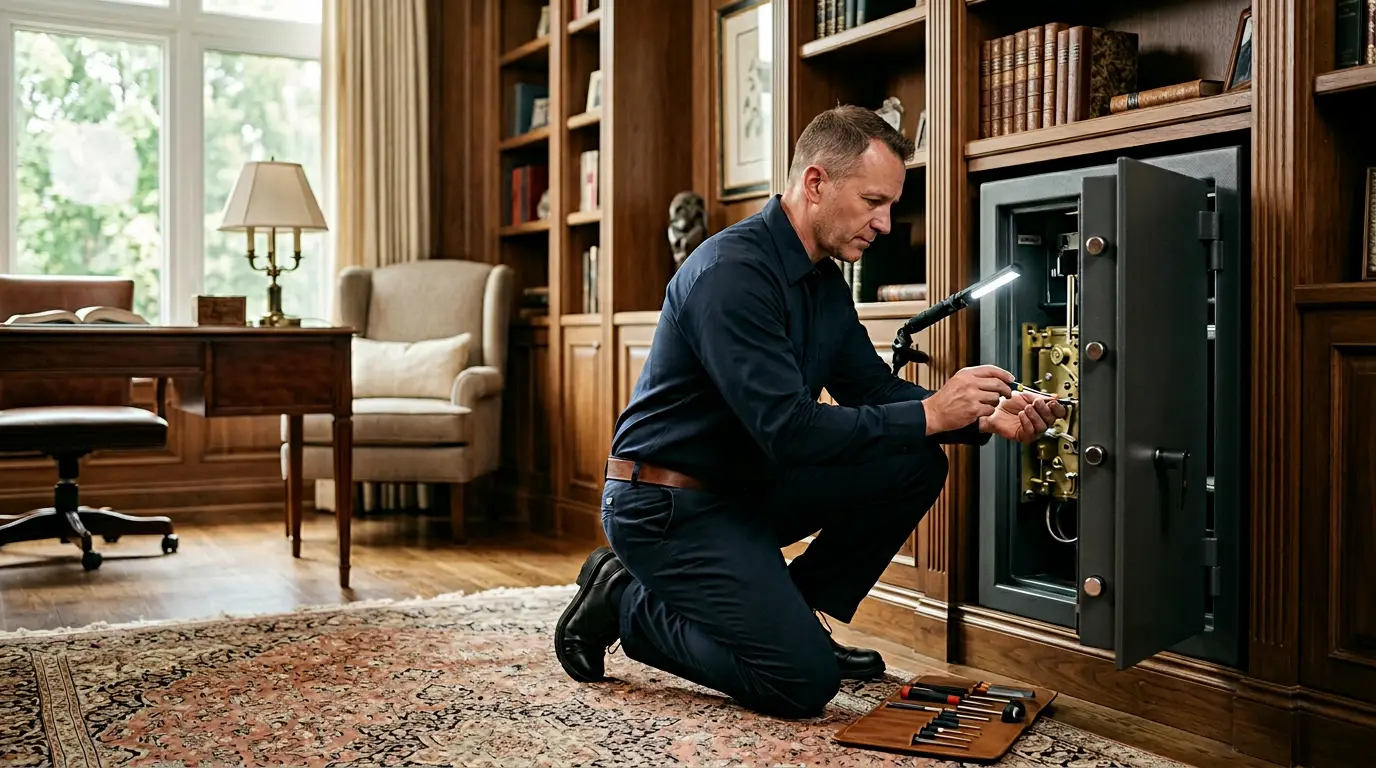
A safe you cannot open is uniquely frustrating, because your valuables are right there, locked behind a forgotten combination or a dead electronic keypad. The good news is that a professional can almost always open it, and in most cases without destroying it. Here is what causes safe lockouts, how they are opened, and the mistakes that turn a simple lockout into a ruined safe.
Why safes lock you out
- A forgotten or lost combination, which is by far the most common reason
- Dead keypad batteries on an electronic safe, which can make it seem broken when it is not
- A failed or jammed mechanism, such as a worn dial, a slipped handle, or seized boltwork
- A lost override key on a safe that uses both a key and a dial or keypad
- Too many wrong attempts, which can trigger a timed lockout on electronic models
Non-destructive opening comes first
A skilled safe technician always starts with the least invasive method the safe allows. For many electronic safes, the fix is as simple as restoring power or replacing the batteries. For dial safes, manipulation can sometimes recover the combination without any damage at all. In other cases the technician can reset or recover the code, or use a manufacturer override path. The goal at this stage is to get you back into the safe while keeping it fully usable afterward.
When more is needed
Some safes, particularly high-security models or those with a genuinely failed mechanism, require drilling. This is not the crude break-in people imagine. A trained technician drills a precise, pre-planned point to reach the lock, opens the safe, and then repairs the entry and replaces the lock so the safe is fully functional again. Done correctly, even a drilled safe goes back into service. The difference between a professional and a DIY attempt is precision and knowing exactly where, and where not, to drill.
Different safes, different approaches
The right method depends on the safe. Fire safes, gun safes, floor and wall safes, and commercial safes all have different lock types and internal protections, including hardplate and relockers designed to resist forced entry. This is exactly why brand and model matter: a technician who knows your safe type can choose the fastest non-destructive route and avoid triggering the very defenses that make a safe harder to open.
What not to do
- Do not drill it yourself; hitting a relocker or the wrong spot can permanently lock the safe shut
- Do not pry the door, which rarely works and can damage the boltwork and contents
- Do not keep entering guesses on an electronic safe, since repeated failures can trigger a lengthy lockout
- Do not ignore a dead keypad as if the safe is broken; it is often just batteries
How to choose a safe technician
Safe work is a specialty, so it pays to choose carefully. Note the brand and model if you can, and look for a locksmith who specifically handles safe opening, leads with non-destructive methods, and can explain the likely approach and cost before any work begins. A good technician treats your property and its contents with care and discretion.
Avoiding the next lockout
Once you are back in, a little maintenance prevents a repeat: record your combination somewhere genuinely secure but separate from the safe, replace electronic batteries on a schedule before they die, and keep any override key somewhere safe that is not inside the safe itself. Small habits keep your valuables accessible when you actually need them.